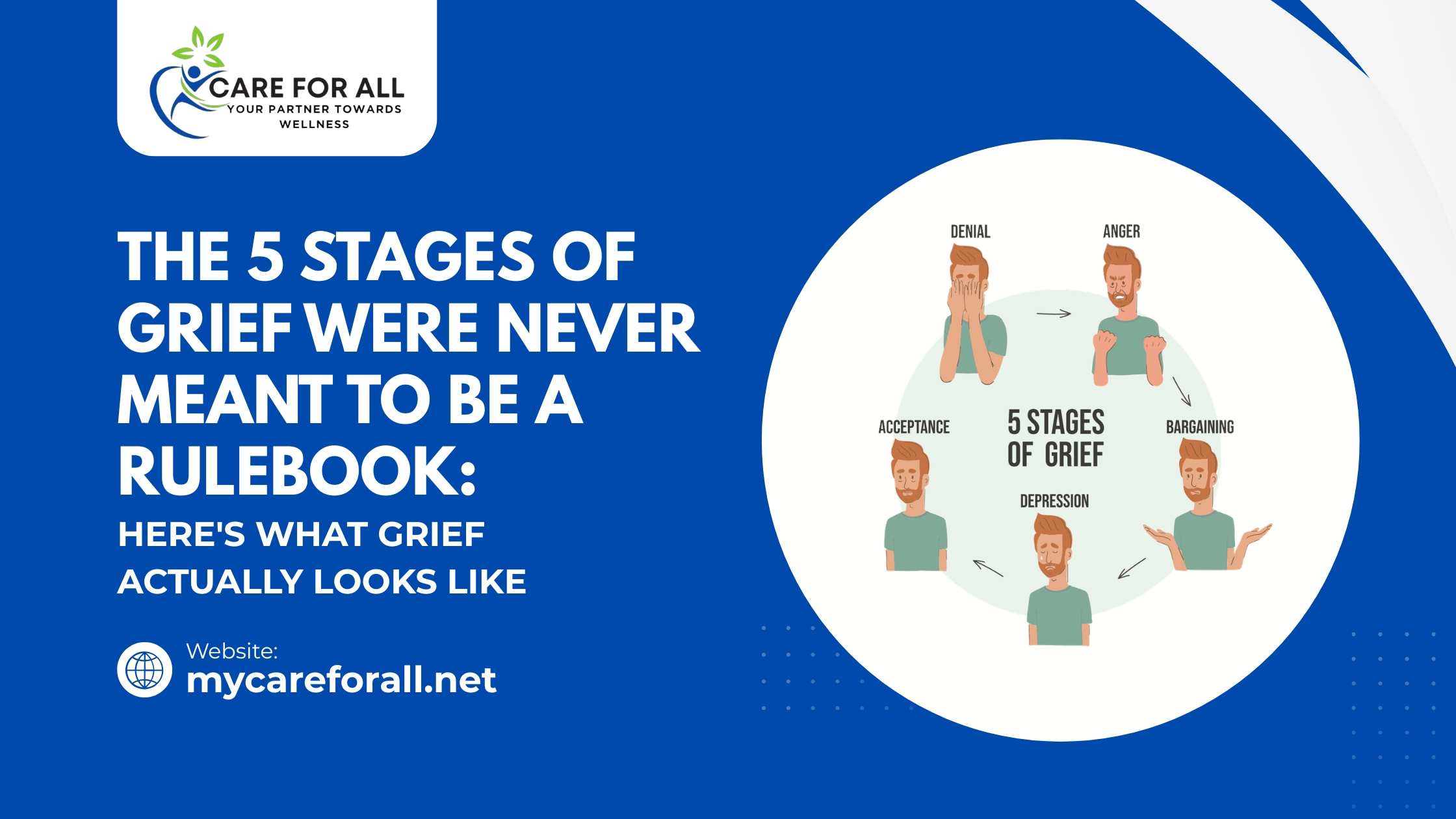
The 5 phases of grief have been ingrained deeply into our cultural knowledge of grief to the extent that most individuals anticipate the mourning to have a clean, well-organized path. The grieving phases discussed by Elisabeth Kubler Ross in her revolutionary book written in 1969. Founded on the experience of dying patients themselves, rather than the people who lost their family members. However this Kubler Ross five stages model has been greatly misunderstood giving false hopes of the way grief should appear.
The Misunderstood Origins
The grief work of Elisabeth Kubler-Ross transformed the conversation on death and dying. The fact that she identified denial anger, bargaining depression acceptance suit validated feelings that were hitherto deemed to be inappropriate. Nevertheless, the grief stages concept was simplified in popular culture, in fact, making a descriptive into prescriptive steps.
According to the misunderstood applications, people are supposed to follow five emotions in order to grieve properly. This myth of grief causes unnecessary anxiety to griefers when they come to the realization that their experience does not match the template. The misconception of grief phases as linearity of healing is both opposing to studies and also opposing to life experience.
What Grief Really Feels Like
The process of grief is so untidy, disorganized and completely unpredictable. Non linear grieving refers to the fact that, at times, you may experience acceptance and at other times, you may experience crushing denial. Grief does not fit in any neat and tidy timeframe, in terms of weeks and months. It includes the dishonest mountain of sorrow that comes with good days and then shattering heartbreaks in which the cause is just not defined.
Grief comes with shifts, at times in ripples or tsunamis that leave one on his feet even years after the loss has been experienced. This grieving back and forth is baffling when you are anticipating months of straight advancement. The grief roller coaster incorporates both opposing emotions at the same time that cannot be labeled into the individual phase.
Personal Avenues through Disaster
The way that you will go through grief will not be the same as the ones that other people will encounter and every grief process is different since it represents different relationships, different circumstances, and personalities. Each person mourns in his or her own way depending on the type of attachment styles, past losses, and support systems among many other aspects. This individual process of grief cannot be scale and time bound.
An individual grieving process may consist of relief and guilt together preceded by anger towards the dead individual/people or even of gratuity. These ambivalent grief responses co-exist in such a manner that is conflictual and quite natural. Mixed feelings grief encompasses a loving and a hating person at the same time, the relishing of life and the lamenting of the loss.
Dimensions and Types of Grief
Complicated grief exists where grief stagnates causing disruption in normal operation after a long period of time. Anticipatory grief starts when one anticipates their death and gets ready to lose someone that is likely to happen. Delayed grief starts when the situation allows grief when some months or years following loss.
Going out of the five stage model
After five stages, other models of grief are more appropriate as they consider the reality of mourning. Modern grief theory does not stress on the stages but on activities such as the acceptance of loss, the process of pain, the adaptation to the altered reality, and continuing ties with the deceased in the face of moving on.
Living With Loss
The length of the grieving period is a question with no one-answer solution. The reality is that in the grief timeline, acute pain normally fades with time, yet there is no time limit to grief in particular in case of the loss of someone important. And this continued sorrow is an extension of yourself and not something to aspire and get over.
Validating Your Experience
Every emotion is a justifiable grief that should be accepted anger, relief, numbness, and joy. Normal grieving involves forgetting the death of the individual, conversing with the deceased, sense of presence, or no sense. The behaviors associated with grief may be weeping all the time or not crying at all.
Practical Navigation
Grief takes time and needs self compassion rather than the use of strategies or techniques to cope with it. What works with one individual because of grief coping mechanisms may not with the other. Finding a way of coping with grief does not involve demanding that one go at a specified pace but rather being comfortable with where they are day in and day out.
Social Dimensions
The process of mourning tends to alter relationships and grief. There are those bonds that strengthen and others that weaken as human beings are unable to cope with your misery. Social aspects of grief are well intended but ineffective remarks of those who are out of place with the phenomenon of loss.
When to Seek Help
The need to have grief support arises when there are prolonged issues of losing normal functioning in life due to mourning. Professional guidance on the subject of help with grieving avails tools and a point of view. Grief counseling provides a safe outlet to journal about the tough feelings without straining the loved ones.
Continuing Forward
Sorrow is not checked off or defined by a schedule. It comes when it comes and the way it comes, we must not expect it but must be patient when it comes. The real face of grief as it looks is not linear, personal, and most importantly, survivable. Knowing that mourning is not a linear process. It liberates you and removes arbitrary norms and makes real recovery.
Discovering Compassionate Support on Your Way
The process of dealing with loss involves the most personal space, and you need a helping hand that will neither pressure you nor force a schedule. Care For All offers grief counseling based on the current knowledge that honors the fact that people grieve in different ways. Their certified therapists understand that your grieving journey is uniquely yours and will offer help and no advice to live up to old and irrelevant patterns.
Be it a sudden loss, anticipatory grief or you have suddenly found that other losses that you had already suffered come back to haunt you, their caring staff are there right where you are. By volunteering, joining support groups and family counseling, Care For All provides you with safe places where you can work through complex feelings in your own time. To the bereaved that prefer to have their own way of coping with grief because they do not need a diagnosis, but instead they receive education and guidance, output that the bereaved individual would value to overcome grief, their person centered approach would provide this insight and access.
Frequently Asked Questions
Why do some days seem to be okay and other years horrible regardless of loss?
Absolutely. Grief is not progressive and feelings are erratic and change at any given time in life. The pain is intense many years after, apparently due to anniversaries, sensory stimuli, or apparently unrelated incidents.
What is in case I do not go through all five stages? Is that to say that something is wrong?
Nothing is wrong. These steps were descriptive, but not prescriptive. Not everyone can live with all five emotions or has to go through them in various sequences or even at the same time.
What would make me realize that my grief has gotten complicated and requires expert assistance?
It is suggested to seek help when grief has temporarily or permanently crippled functioning, has continuing thoughts of self harm, includes active substance abuse to manage the condition, has left him/her socially isolated, or is permanently if hopelessly stuck, months or years later.